

Tested and Certified Are Not the Same Thing

Many water filtration brands say their products have been tested. But tested and certified are not the same.

Testing simply means a product was evaluated. Certification means an independent, accredited organization has verified that the product meets established performance standards.

Knowing the difference helps you make a more informed decision about the water you drink every day.

You’ve Probably Seen Claims Like These:

Independentlytested
Proven in tested
Laboratorytested
Third-partytested

These claims sound reassuring, but what do they actually mean?

Who performed the testing? What standards were used? Were the results independently verified?

Not all testing claims are created equal.

Understanding the Difference

β€œTested” vs Certified

βœ•

A company can conduct or commission its own testing

βœ“

Evaluated by an independent, accredited certification body

βœ•

Testing methods may vary by brand

βœ“

Uses standardized testing protocols

βœ•

Success criteria may be determined by the company

βœ“

Must meet established performance standards

βœ•

Results are not necessarily independently certified

βœ“

Claims are independently validated

We Require Certification Everywhere That Matters

Smiling pilot in uniform with epaulettes, standing inside an airplane cabin.

Pilots don’t just take a test. They earn licenses verified by an independent authority before they can fly.

USDA Organic seal featuring green text on a white background with a brown circular border.

USDA Organic isn’t self-declared. Products must meet USDA organic standards through independent certification.

Smiling female doctor with curly hair, wearing a white coat and stethoscope, standing in a bright office setting.

Doctors don’t simply complete training. They must pass standardized licensing requirements before practicing medicine.

So why should your water filter be any different?
Explore AquaTru Certifications

You Can’t See What’s In Your Water

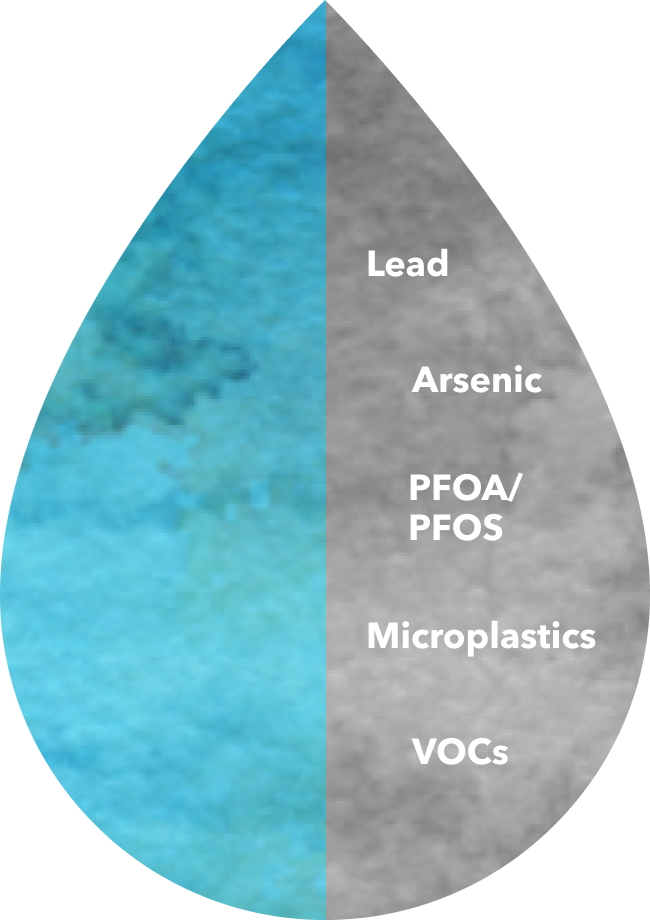
Contaminants like lead, β€œforever chemicals” (PFOA/PFOS), and microplastics are invisible.

That means consumers often rely on product claims when choosing a water filter.

Certification provides independent verification that a product has met established performance standards.

Water droplet graphic highlighting contaminants: Lead, Arsenic, PFOA/PFOS, Microplastics, and VOCs.

Filtration Claims are Hard to Validate on Your Own

It’s easy to compare features like size, color, or price. Filtration performance is different.


Because you can’t easily verify contaminant reduction yourself, independent certification helps provide confidence that certified filtration claims have been independently evaluated.

The Key Difference

Marketing claim

β€œRemoves 99% of contaminants.”

Certified claim

β€œCertified by IAPMO to NSF standards to remove 84 contaminants.”


AquaTru Is Independently Certified by IAPMO to NSF Standards

AquaTru purifiers are certified to reduce 84 contaminants, including lead, β€œforever chemicals” (PFOA/PFOS), arsenic, chromium-6, fluoride, nitrates, VOCs, and microplastics.

Certification verifies that performance meets the applicable NSF standards throughout the certified life of the filter when used as directedβ€”so you can have confidence in the filtration performance you’re getting.

Shop AquaTru Purifiers
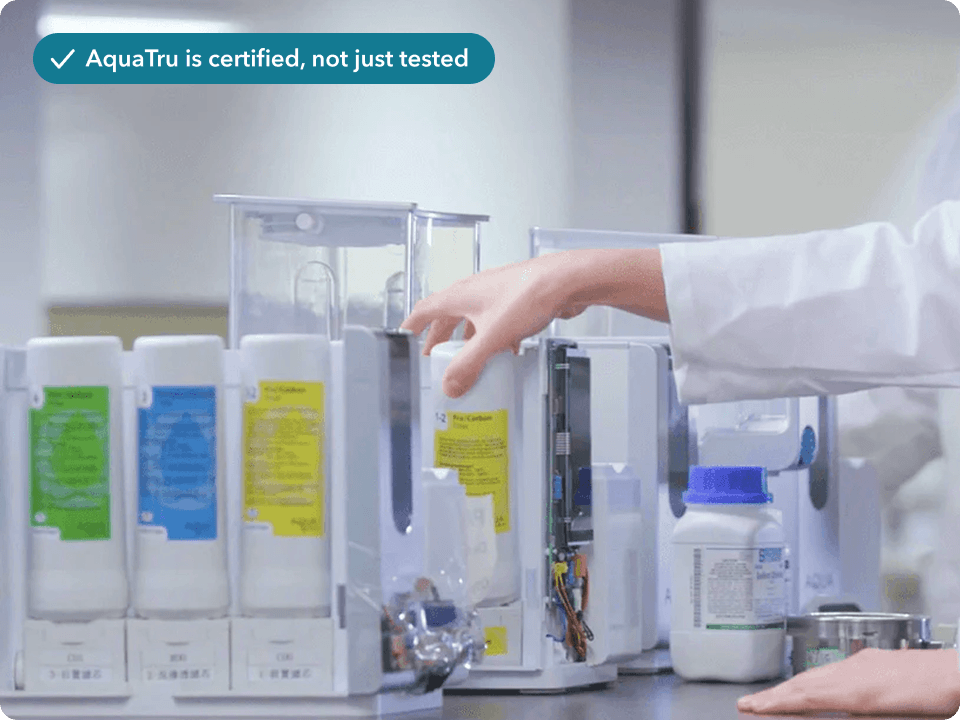
A hand adjusts a water filtration system with various labeled containers on a countertop.

What is IAPMO?

International Association of Plumbing and Mechanical Officials (IAPMO) is one of the leading independent certification organizations for residential water filtration products in North America.

Along with organizations such as National Sanitation Foundation (NSF) and the Water Quality Association (WQA), IAPMO certifies products to applicable NSF/ANSI drinking water standards.

AquaTru chooses IAPMO to independently certify the filtration performance of its products, providing third-party verification that certified contaminant reduction claims meet established industry standards.

Learn more about the contaminants reduced

Lead

A toxic metal with no safe level of exposure.


Lead enters drinking water when aging pipes and plumbing corrode. The EPA has set its health goal for lead at zero β€” there is no level considered safe. Long-term exposure is linked to nervous system damage, developmental delays in children, and kidney and heart problems in adults.

Chromium-6

An industrial chemical linked to cancer risk.


Hexavalent chromium enters water through discharge from steel mills, metal-plating facilities, and the natural erosion of rock and soil. The EPA classifies it as β€œlikely carcinogenic to humans” when consumed in drinking water. Chronic exposure has also been linked to liver and reproductive damage.

Microplastics

Tiny plastic particles now found throughout the human body.


Microplastics are fragments smaller than 5 millimeters that shed from larger plastics and enter water supplies through runoff and environmental breakdown. They have been detected in human blood, breast milk, and major organs. In 2026, the EPA officially identified microplastics as a drinking water contaminant of concern for the first time.

Forever Chemicals (PFOA/PFOS)

Man-made chemicals that don’t break down in the environment or in your body.


PFAS chemicals have been used since the 1940s in nonstick cookware, food packaging, and firefighting foam. They persist in the environment indefinitely because they don’t degrade. The EPA has set its health goal for both PFOA and PFOS at zero, citing cancer risk. Long-term exposure is linked to cardiovascular disease, kidney cancer, and reproductive harm.

Arsenic

Naturally occurring, odorless, tasteless, and dangerous over time.


Arsenic seeps into water from natural geological deposits and industrial or agricultural sources. You can’t detect it by taste or smell. Long-term exposure at low levels is associated with cancers of the bladder, lungs, and liver, as well as diabetes and cardiovascular disease.

Volatile Organic Compounds (VOCs)

Industrial and household chemicals that dissolve into water and are invisible to taste or smell.


VOCs are carbon-based chemicals found in fuels, solvents, dry-cleaning agents, and industrial runoff. They dissolve easily into groundwater and can persist for years. The EPA has identified elevated VOC levels in drinking water as a health concern, with some linked to liver and kidney damage, nervous system effects, and increased cancer risk.

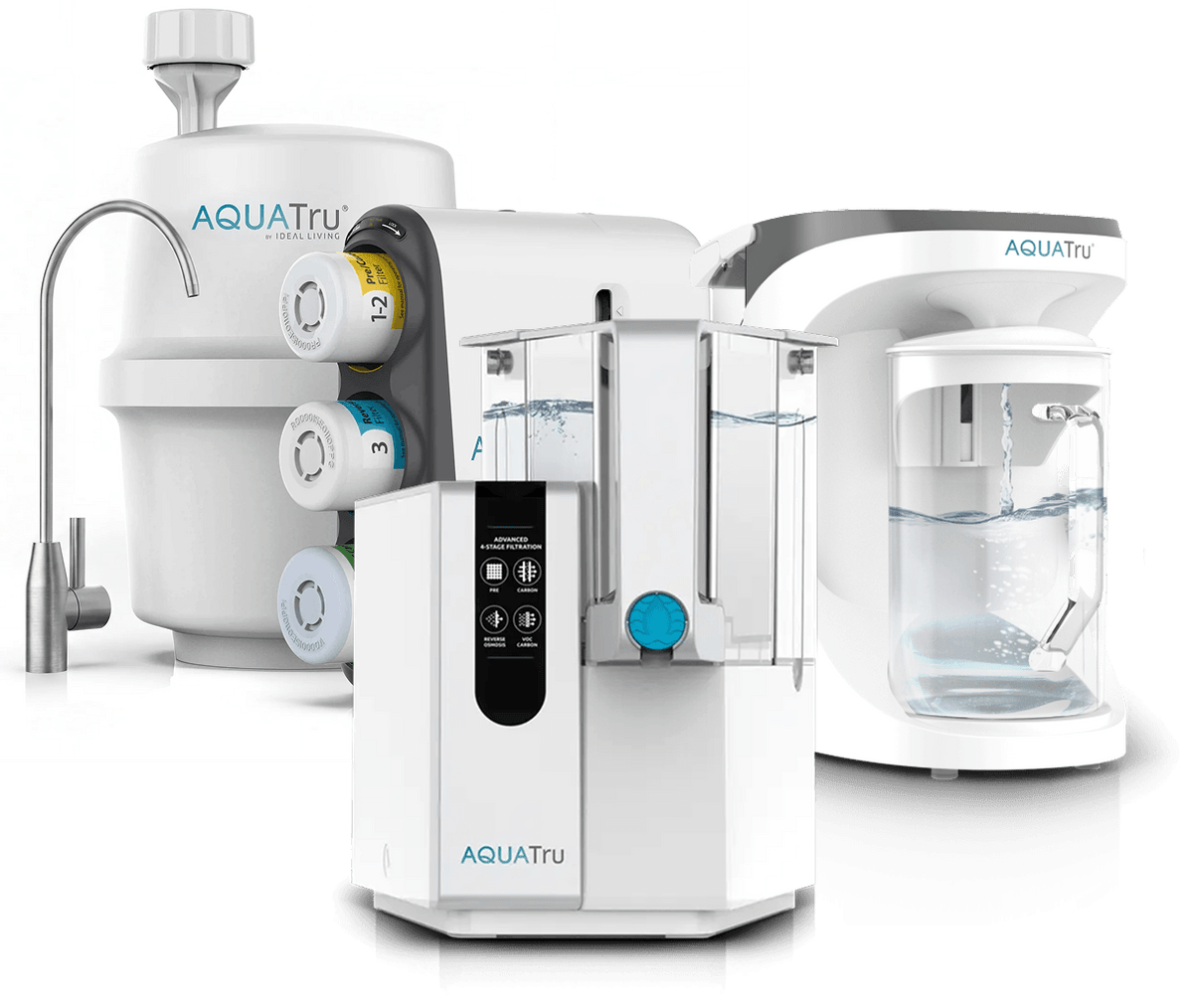
AQUATru water filtration system with multiple components, including a tank, filtration unit, and water dispenser.

View purifier performance data sheets for each product


Carafe Countertop Purifiers


Classic Countertop Purifiers


Under Sink Purifiers


Under Sink (Gen 2)

Don’t Just Settle for Claims

Choose water filtration backed by independent certification and verified performance.

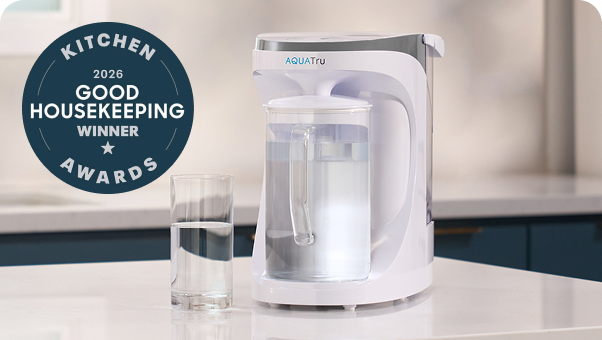
AQUAtru water filtration system next to a glass of water, with a Good Housekeeping Awards badge.

Carafe

4.9 (1011 reviews)

Compact purifier with glass pitcher, perfect for smaller households.

SHOP NOW β†’
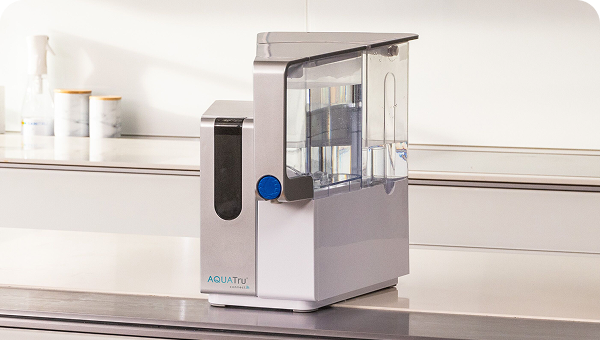
AQUATru water purification system on a countertop with a clean, modern design and a blue control knob.

Classic

4.6 (2737 reviews)

Powerful countertop purifier for clean, great-tasting water.

SHOP NOW β†’
AQUATru water filtration system installed under a sink with colored tubing and a control panel on the side.

Under Sink

3.8 (95 reviews)

An under-the-sink solution for pure water, perfect for families and high-use households.

SHOP NOW β†’

Frequently Asked Questions

Everything you need to know about the AquaTru Shower. Can't find your answer? Reach out to our support team.

Why does certification matter for a water filter?

Certification means an independent, accredited organization has verified that a water filter meets established performance standards. It provides additional confidence that certified contaminant reduction claims have been independently evaluated.

Can a product be tested without being certified?

Yes. A product can be tested without undergoing independent certification. Certification is a separate process that evaluates a product against recognized standards through an accredited third-party organization.

What contaminants are AquaTru purifiers certified to reduce?

AquaTru purifiers are certified to reduceΒ 84 contaminants, including lead, β€œforever chemicals” (PFOA/PFOS), chromium-6, arsenic, fluoride, nitrates, volatile organic compounds (VOCs), and microplastics.

AquaTru countertop purifiers are theΒ only countertop water purification systems certified to reduce 84 contaminantsΒ to applicable NSF/ANSI standards, giving you independently verified filtration performance you can trust.

Who certifies AquaTru products?

AquaTru products are independently certified by IAPMO R&T, an accredited certification organization that certifies water filtration products to NSF/ANSI standards.